AI Transcription Pricing Calculators: 6 Prompts for Real Costs
Service pricing vs API pricing is different math entirely. 6 calculator prompts — podcaster, researcher, creator, sales team, enterprise, and subscribe-or-not.

How much does AI transcription actually cost? It depends entirely on how you transcribe — and the two markets run on different math.
If you upload files (interviews, episodes, depositions, voice memos) and want a dashboard rather than code, you are pricing a service. TranscribeBee charges $2 per audio hour, pay-per-use — the math is your audio hours × 2, full stop.
If you are a developer integrating transcription into a product, per-minute APIs (Whisper at $0.36/hr, Deepgram at ~$0.46/hr, AssemblyAI at $0.15/hr base) look far cheaper — until you add the upload UI, job queue, error handling, and a separate diarization service for speaker ID that the per-minute rate doesn't include. Different market, different math.
The variable that dominates everything: volume shape
The biggest cost factor is not the rate — it is whether your volume is consistent or project-based. Subscriptions optimize for the first, pay-per-use for the second, and picking wrong can double your annual cost.
One honest data point that deserves stating plainly: for heavy consistent users, TurboScribe's $120/year unlimited plan beats every pay-per-use service on raw cost — if you genuinely transcribe 20+ long files every single month, every month, there is no arithmetic that saves pay-per-use. The break-even against $2/hour pay-per-use is about 60 audio hours per year spread evenly; project-based and seasonal users routinely fall under it, which is why both models exist.
The six prompts below — all free in our AI prompts library — run this math for specific situations. Paste one into ChatGPT or Claude with your numbers.
Universal Pricing Calculator Prompt
The general-purpose calculator behind all six scenarios below: paste your volumes and candidate services, and it normalizes everything to cost per audio hour with break-even analysis. Copy it straight from here:
Calculate my transcription costs across multiple services based on my specific situation.

MY TRANSCRIPTION NEEDS:
- Use case: [PODCAST / RESEARCH / SALES CALLS / CONTENT CREATION / MEETINGS / OTHER]
- Monthly audio hours (estimate): [NUMBER] hours
- Usage pattern: [CONSISTENT / VARIABLE / ONE-TIME PROJECT]
- Number of files per month: [NUMBER]
- Average file length: [MINUTES]
- Speakers per file: [NUMBER]

REQUIREMENTS:
- Speaker identification needed? [YES/NO]
- Timestamps needed? [YES/NO]
- Output format: [TXT/SRT/VTT/JSON/ALL]
- Turnaround time: [IMMEDIATE / SAME DAY / FLEXIBLE]

CALCULATE COSTS FOR:

1. **TranscribeBee** (Pay-per-use, no subscription)
   - Single-file: $2.50 (0–15 min) or $6.00 (16–120 min) flat per file
   - Bulk batches: Tiered $3.00–$6.00/file across 7 batch sizes (1–5: $6, 6–10: $5, 11–15: $4.75, 16–49: $4.50, 50–99: $4, 100–249: $3.50, 250+: $3)
   - Includes: Speaker ID, all formats (TXT/SRT/VTT/JSON)
   - Note: If my usage is consistent and heavy (20+ files/month every month), also compare TurboScribe ($10/mo billed annually, unlimited uploads, 50-file batch cap) — subscriptions can beat pay-per-use on raw cost for high-consistency users.

2. **Otter.ai** (Subscription)
   - Free: 300 min/month
   - Pro: $16.99/month for 1,200 min
   - Business: $30/user/month for 6,000 min

3. **Temi** (Pay-per-use)
   - $0.25/minute
   - Speaker ID included

4. **Rev AI** (Pay-per-use API)
   - $0.25/minute base

5. **Descript** (Subscription + editing)
   - Free: 1 hour/month
   - Creator: $15/month (10 hours)
   - Pro: $30/month (30 hours)

FOR EACH SERVICE, CALCULATE:
- Monthly cost with math shown
- Annual projection
- Cost per audio hour (effective rate)
- Utilization rate (for subscriptions)
- Hidden costs I might miss

THEN PROVIDE:
1. **Ranked recommendations** for my specific usage
2. **Break-even analysis**: At what volume does each option make sense?
3. **Risk assessment**: What happens if my usage increases/decreases 50%?
4. **Final recommendation** with clear reasoning

---
Prompt by TranscribeBee (transcribebee.com) – Professional AI transcription with speaker identification
---
The Podcaster Calculator
Inputs: episode length, episodes per month, back-catalog size. Output: monthly and annual transcription cost, per-episode unit cost, and the back-catalog one-time cost — plus the break-even against subscription tools given podcast seasonality (the variable podcasters always forget: hiatuses are months you shouldn't be paying).
The Research Project Calculator
Built for grant-budget reality: interview count, average duration, and a margin for re-records, producing a project-total figure suitable for a budget line item. Project-based work is pay-per-use's home turf — the budget zeroes out when the study ends.
The Content Creator Calculator
For mixed workloads — YouTube videos, shorts, streams, podcast crossovers — where file lengths vary wildly. It segments your content mix, prices each lane, and shows which lane drives cost (streamers: it is the streams).
The Sales Team Calculator
Per-rep call volume × average call length × team size, with the ChatGPT/Claude subscription for analysis included — the full DIY conversation intelligence stack cost, compared directly against Gong-class per-seat pricing for your headcount.
The Enterprise Volume Calculator
For organizations doing hundreds of hours monthly: models flat pay-per-use against per-minute API tiers (including the integration engineering as a real line item) and subscription seats, with sensitivity analysis on volume growth. The usual finding: the right answer changes at scale boundaries, and knowing your boundary is the deliverable.
The Should-I-Subscribe Calculator
The general-purpose one. Paste 6–12 months of actual usage (calendar-derived, not estimated) and the subscriptions you are considering; it computes effective per-hour cost under each model, month by month, and tells you which months would have flipped the answer. Most people discover their "average" month doesn't exist — and that the variance, not the average, decides the model.
The meta-advice
Run the calculator before the commitment, and rerun it twice a year. Pricing changes, volume changes, and the model that fit last year's workload quietly stops fitting. The arithmetic takes five minutes with a prompt; the wrong annual plan costs real money for twelve.

More Posts

Per-minute, subscription, freemium, and enterprise transcription pricing decoded — what each model really costs per hour and which one fits your usage pattern.
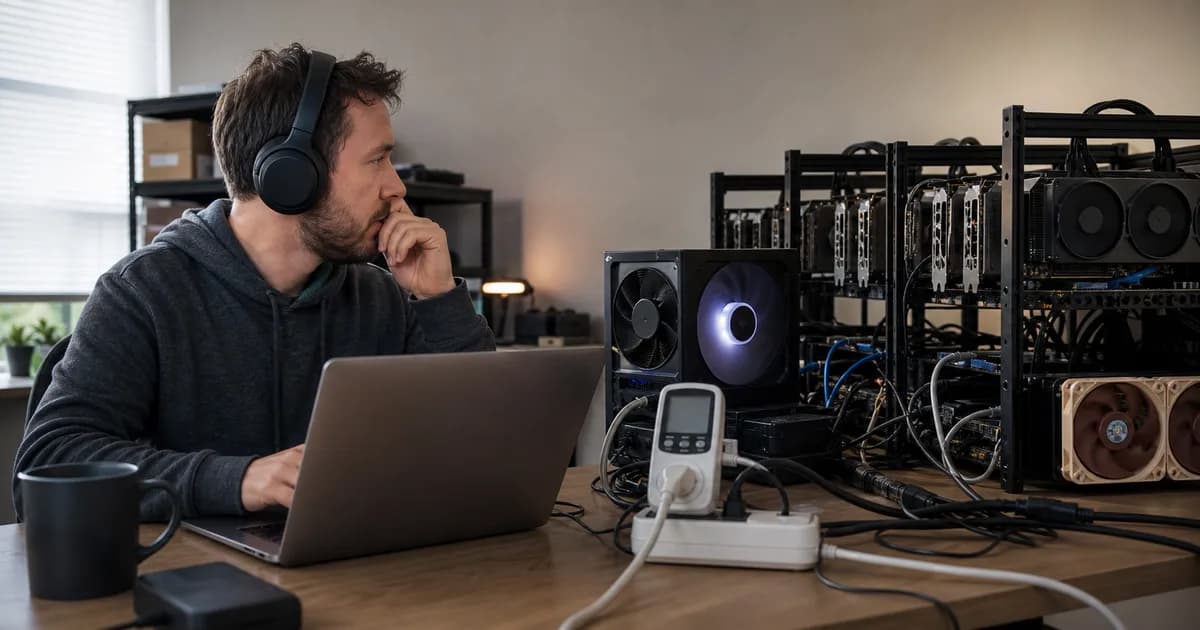
OpenAI's Whisper API costs $0.36/hour; self-hosting starts around $861/month all-in. Where the break-even really sits and who should choose what.

A practical cost comparison between pay-per-use transcription and monthly subscriptions, with a simple way to decide which model fits your workload.
Newsletter
Join the community
Subscribe to our newsletter for the latest news and updates