Trint Pricing 2026: Premium Journalism Features, Premium Costs
Trint runs $52–100 per seat monthly — built for newsrooms, priced like it. When its media features justify the cost, and when teams just need transcripts.
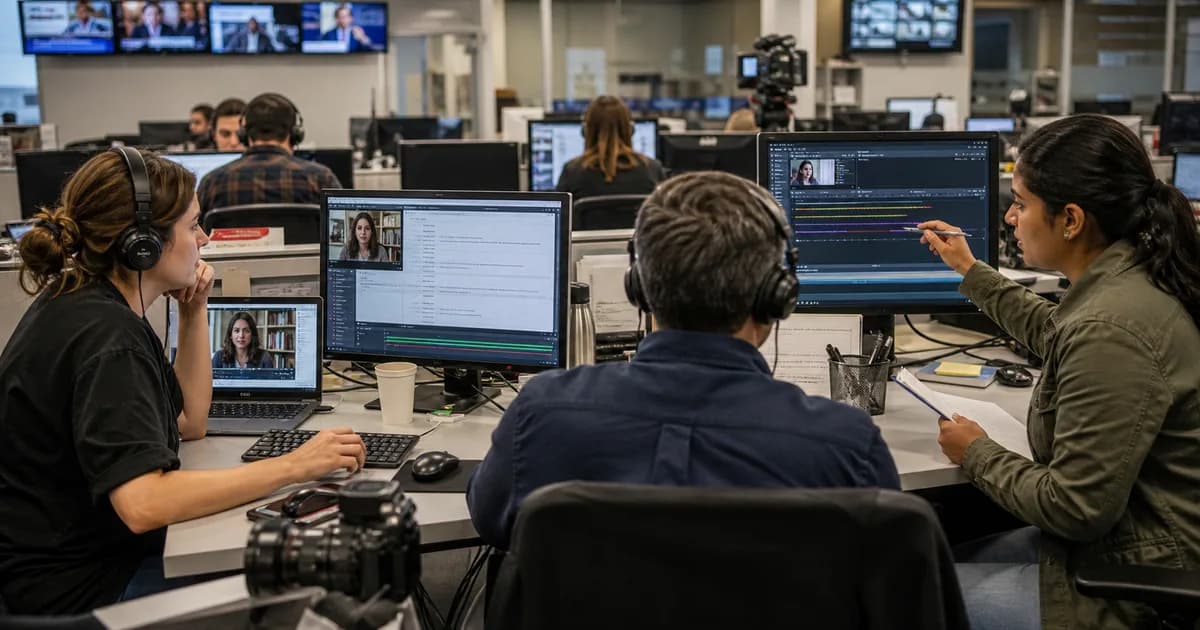
Trint charges $52–80 per seat per month for Starter (capped at 7 files/month) and $60–100 for Advanced ("unlimited") — among the most expensive transcription subscriptions on the market. That is not an accident or a ripoff; it is positioning. Trint was built for newsrooms and media organizations, and its pricing assumes a media organization's budget. Rates verified from Trint's pricing page and third-party sources, mid-2026.
The plans
| Plan | Monthly | Annual (per mo) | Files |
|---|---|---|---|
| Starter | $80/seat | $52/seat | 7/month |
| Advanced | $100/seat | $60/seat | "Unlimited" (fair-use) |
| Enterprise | Custom | Custom | Custom |
Two structural notes: the Starter cap of 7 files a month makes it nearly decorative for working journalists (one interview-heavy story exceeds it), pushing real users to Advanced at $960–1,200/year per seat. And "unlimited" carries fair-use language vague enough that heavy users can't fully predict costs. A 5-person team is committing $3,000–6,000/year minimum.
What the premium actually buys
The feature set is genuinely newsroom-shaped: live transcription for press conferences, translation across ~54 languages, collaborative editing with roles and review workflows, CMS and API integrations, and an editor designed for pulling broadcast quotes fast. For an organization where transcription sits inside a multi-person editorial pipeline with deadlines measured in minutes, those workflows are the product, and per-seat pricing maps to per-journalist value.
When Trint is worth it
- Newsrooms running live events through transcription daily.
- Multilingual editorial operations using the translation pipeline.
- Teams whose collaboration genuinely happens inside the transcript editor.
If you recognize your organization, the cost is defensible — compare it against Sonix and enterprise tiers of the meeting platforms rather than against budget tools.
When it isn't
If the job is "accurate transcripts of our recordings," the journalism infrastructure is overhead. TranscribeBee delivers speaker-labeled transcripts with TXT/SRT/DOC/PDF export at $2 per audio hour, pay-per-use. The comparison at realistic volumes:
| Monthly volume | Trint Advanced (1 seat, annual) | TranscribeBee |
|---|---|---|
| 10 hours | $60 | $20 |
| 25 hours | $60 | $50 |
| 50 hours | $60 | $100 |
Trint's seat fee wins on raw transcription cost above ~30 hours/month per seat — if you ignore the per-seat multiplication for teams and the fair-use ambiguity. Below that, or for any team where most seats transcribe occasionally, pay-per-use is structurally cheaper. And the editorial features have free-tool substitutes for non-newsroom workflows: our AI prompts library covers quote extraction, summarization, and content transformation with the LLM you already use.
AI Prompt: Trint Cost Calculator
The Trint Cost Calculator prompt in the same library models your team honestly: seats by actual usage level, monthly file volumes, annual-vs-monthly billing, and the crossover against pay-per-use — including the question teams skip, which is how many of those seats transcribe enough to justify $60/month each.

More Posts

$10/hour pay-as-you-go or $5/hour plus $22/user/month — Sonix's hybrid pricing needs a spreadsheet. Here is the crossover math and when each plan wins.

Otter's Pro plan caps you at 1,200 minutes a month whether you use them or not. The effective per-minute math, and when subscriptions actually win.

Per-minute, subscription, freemium, and enterprise transcription pricing decoded — what each model really costs per hour and which one fits your usage pattern.
Newsletter
Join the community
Subscribe to our newsletter for the latest news and updates