Deepgram Pricing 2026: Real-Time vs Batch, and Who It's For
Deepgram Nova-3 runs $0.0043/min batch and $0.0077/min streaming. The real decision is which you need — and whether you need a developer API at all.
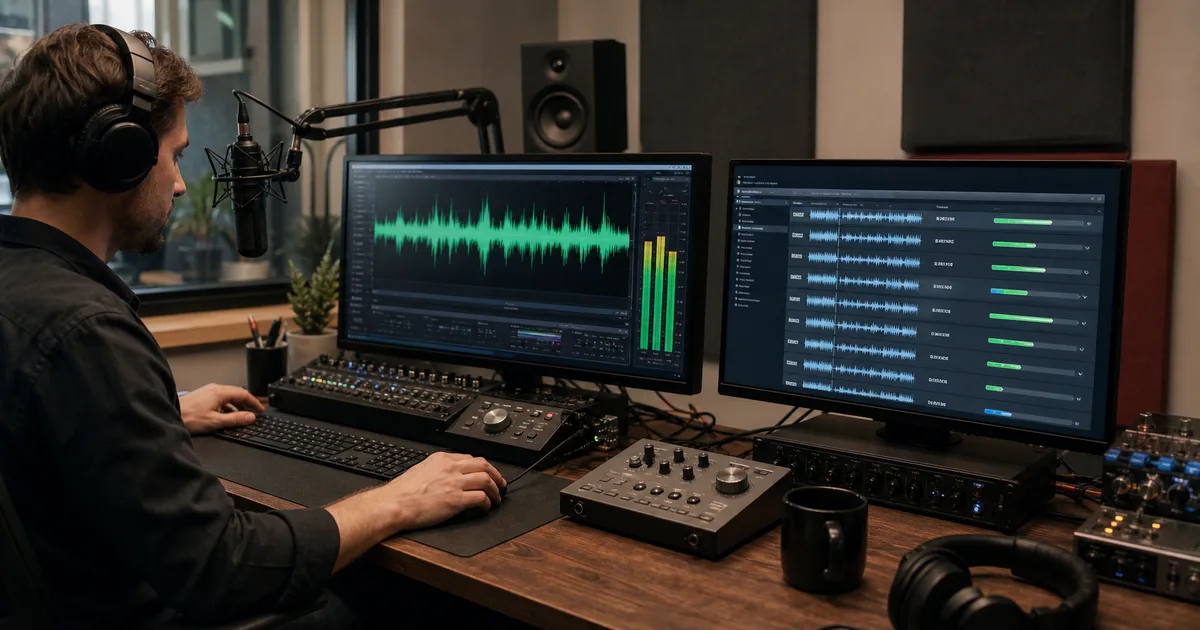
Deepgram's Nova-3 model costs $0.0043 per minute for batch (pre-recorded) and $0.0077 per minute for streaming, pay-as-you-go — which sounds like a pricing question but is really two different decisions: streaming vs batch, and API vs service. Rates verified from Deepgram's pricing page, mid-2026.
The plans
| Plan | Per minute | Commitment |
|---|---|---|
| Pay-As-You-Go, batch | $0.0043 | None |
| Pay-As-You-Go, streaming | $0.0077 | None |
| Growth, streaming | $0.0065 | $4,000–10,000/year minimum |
At 1,000 audio hours per month, Growth saves $72/month over Pay-As-You-Go — 16%, meaningful only at real volume. Below the commitment threshold, Pay-As-You-Go is the obvious choice, and Deepgram's per-second billing means you pay for exact audio duration.
Real-time vs batch: the decision that actually matters
Real-time streaming requires dedicated infrastructure and WebSocket session management, and most developers don't ask the key question until after implementation: does the use case actually need words appearing live, or can it tolerate a few minutes of delay?
Real-time is justified for live captioning, voice agents, and in-call assistance — cases where the value is the immediacy.
Batch wins everywhere else, and it is most use cases: meeting archives, content pipelines, research interviews, compliance recording. Batch is simpler to build, easier to retry on failure, and — as with every provider — slightly more accurate, because the model sees full context instead of a rolling window.
If you are choosing real-time "to be safe," you are paying an infrastructure complexity premium for latency nobody asked for.
Hidden costs for small teams
Deepgram is a developer API, priced and designed for products. The per-minute rate excludes what actually costs you:
- Integration engineering — auth, uploads, webhooks, output parsing (raw JSON, not documents).
- Feature add-ons priced separately depending on model and plan.
- The Growth discount requires forecasting a year of volume — wrong guesses are sunk cost.
Deepgram vs a flat-rate service
If you are building voice features into software, Deepgram is one of the strongest API choices and the $200 free credit makes evaluation easy. If you have recordings and need transcripts, the comparison flips: TranscribeBee is $2 per audio hour with speaker labels, multiple export formats, and zero integration — upload, download, done. The API's $0.46/hour rate only beats it if your time wiring up the API is worth nothing.
AI Prompt: Deepgram Cost Calculator
To model a real scenario — volume, streaming vs batch, plan tier — use the Deepgram Cost Calculator prompt from our free AI prompts library. It produces a monthly estimate and break-even against both Growth commitment and flat-rate alternatives.

More Posts
AssemblyAI's base rate covers transcription only — speaker ID, sentiment, PII redaction and summarization all stack on top. Here is the real per-hour math.
OpenAI's Whisper API costs $0.36/hour; self-hosting starts around $861/month all-in. Where the break-even really sits and who should choose what.

Per-minute, subscription, freemium, and enterprise transcription pricing decoded — what each model really costs per hour and which one fits your usage pattern.
Newsletter
Join the community
Subscribe to our newsletter for the latest news and updates