AI Transcription Strategy for Solo and Small Law Firms
Court reporters cost $180–360/hour with 3–7 day delivery. Where AI transcription fits in a small firm's workflow — and where it absolutely doesn't.

Solo practitioners pay court-reporting rates — often $2.00–7.00+ per page plus appearance fees, travel time, and certification charges — with 3–7 business day delivery. AI transcription delivers working text in minutes for $2 per audio hour. The strategy question for a small firm is not which one to use; it is drawing the line correctly between them.
The line, stated plainly: AI transcription is for internal reference, case preparation, and research. Official court records, certified depositions, and evidence submissions remain the domain of certified court reporters. Nothing in this guide changes that.
The cost reality for small firms
Traditional deposition transcripts stack up fast: per-page rates, travel time ($75–150/hour), minimum appearance fees ($200–400), rough drafts at $1.50–2.50/page extra, copy certification per copy. A solo handling a dozen depositions a year can spend five figures on transcription — much of it on transcripts used only internally, where certification bought nothing.
| Service | Cost per audio hour | Turnaround |
|---|---|---|
| Court reporter (certified) | $180–360+ | 3–7 days |
| AI working transcript | $2 | ~3 minutes |
Where AI transcription earns its place
- Deposition working copies — when you have the audio/video, generate a same-day working transcript for case prep while the certified version is in production, or for recordings you would never have certified at all.
- Client meetings and intakes — documentation of facts, commitments, and instructions that currently lives in handwritten notes.
- Witness interviews — informal pre-deposition conversations where exact wording matters later.
- Hearings and proceedings review — your own recordings (where permitted) for argument prep.
TranscribeBee handles multi-speaker legal audio with speaker labels and timestamps; files are auto-deleted after processing — relevant to the confidentiality analysis below.
Ethics and confidentiality
Three checks before adopting any cloud tool, transcription included:
- Confidentiality (Model Rule 1.6 and state equivalents): vet the service's data handling — retention period, encryption, whether content trains models. Prefer services that delete files after processing and state it plainly.
- Competence (Rule 1.1, Comment 8): the technology-competence duty cuts both ways — you must understand the tool's limits (AI transcripts contain errors; never quote one in a filing without checking the audio) and most state bars now read the rule to cover knowing when technology serves the client.
- Supervision (5.1/5.3): if staff run the workflow, the review obligations are yours.
AI prompts for legal case preparation
Working transcripts unlock the analysis layer. From our free AI prompts library:
Prompt 1: Deposition Analysis for Case Strategy
Processes a deposition transcript into case-prep raw material: key admissions with locations, testimony mapped against your theory of the case, areas of vagueness worth follow-up, and credibility observations — the structured first pass that turns reading time into strategy time. The full legal toolkit (contradiction analyzer, timeline constructor, cross-exam prep) is covered in our deposition analysis guide.
Prompt 2: Client Intake Summary Generator
Converts a recorded intake conversation into a structured memo: parties, facts and chronology as the client tells it, claimed damages, documents mentioned, deadlines, and open questions for follow-up. A solo's intake notes become consistent and complete without a paralegal in the room.
Implementation that respects the budget
Start narrow: AI-transcribe client meetings for one month (cost: a few dollars), evaluate against your note-taking, then extend to witness interviews and deposition working copies. Keep a one-line engagement-letter or intake disclosure about technology-assisted documentation, and put a standing calendar rule on it: anything destined for a court file gets certified, full stop.

More Posts
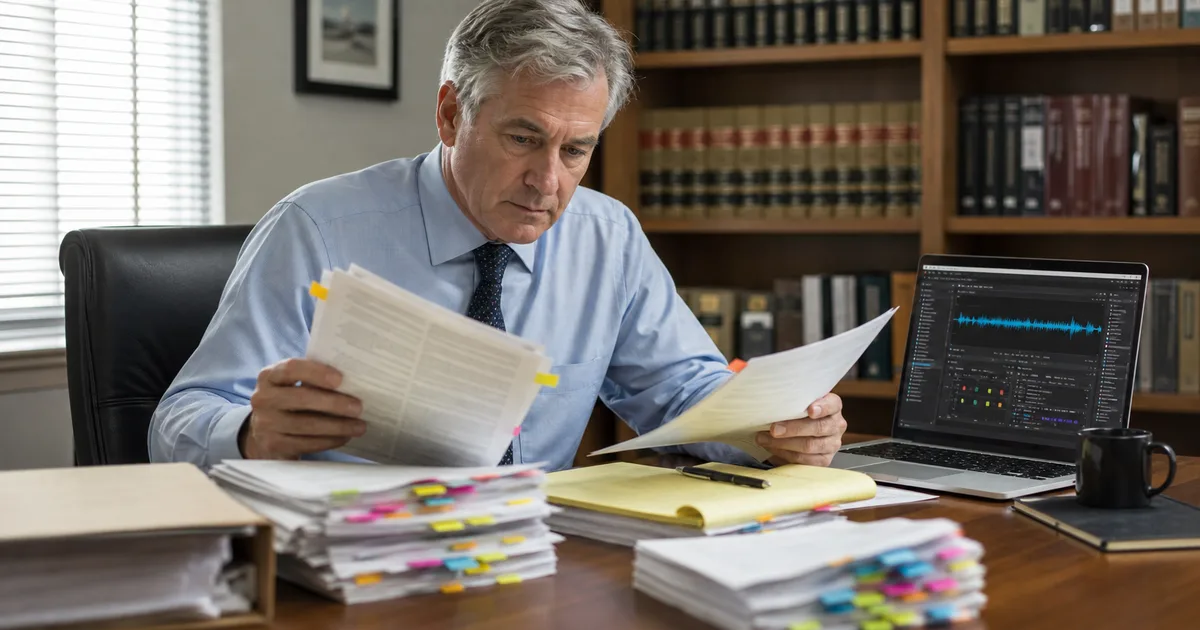
Contradiction detection, timeline construction, cross-exam prep, and case theory development — five prompts that turn deposition reading into strategy.

47 deposition recordings in a case folder — what does transcribing them actually cost, and how do you compare bulk packages against pay-per-use honestly?

A practical workflow for turning board meetings, client calls, and team discussions into minutes, action items, and executive summaries with AI.
Newsletter
Join the community
Subscribe to our newsletter for the latest news and updates