The Legal AI Toolkit: 5 Deposition Analysis Prompts
Contradiction detection, timeline construction, cross-exam prep, and case theory development — five prompts that turn deposition reading into strategy.
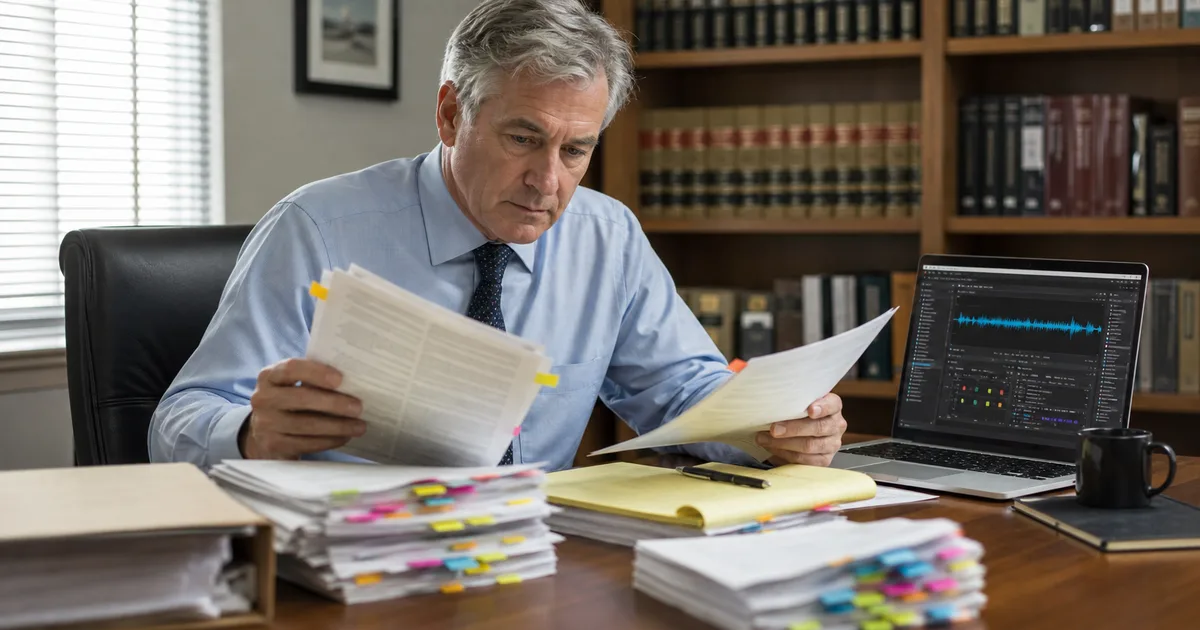
Deposition analysis consumes billable hours in the least leveraged way possible: reading hundreds of pages for contradictions, dates, and admissions — work that is essential, tedious, and prone to exactly the oversights that lose cases. A complex matter with a dozen depositions is thousands of pages; no human reads them all with uniform attention.
AI analysis does not replace legal judgment — it amplifies it, by doing the systematic extraction so your expertise goes to strategy and argumentation. These five prompts, free in our AI prompts library, form a complete deposition-analysis workflow. Use TXT transcripts for the prompts; keep SRT for timestamp-precise references back to the record. (All outputs are attorney work product drafts — verify every citation against the certified transcript before relying on it.)
Prompt #1: Contradiction and Inconsistency Analyzer
The workhorse. It examines testimony for direct internal contradictions (with exact quotes and locations for each side of the conflict), timeline inconsistencies, and factual discrepancies — then goes a layer deeper into credibility signals: selective memory patterns ("I don't recall" clustering around unfavorable topics while favorable details stay crisp), bias indicators in language, and coaching tells like lay witnesses producing rehearsed legal phrasing. Run it across multiple witnesses' transcripts and it maps where their accounts collide — the raw material of cross-examination.
Prompt #2: Timeline Construction and Event Sequencing
Extracts every temporal reference — explicit dates, relative markers ("about a week after the meeting"), sequence claims — and assembles a chronology with a citation for each entry, flagging gaps and conflicts between witnesses. Cases are won on timelines more often than on rhetoric, and building one manually from a dozen depositions is a week of associate time this prompt compresses to an afternoon of verification.
Prompt #3: Cross-Examination Preparation and Strategy Development
Takes the contradictions and timeline output plus your case theory and drafts examination structure: topic sequencing designed to commit the witness before confrontation, the specific prior statements to lock in, impeachment setups with transcript references, and the escape routes a prepared witness will attempt. You will rewrite most of it — that is the point; rewriting a competent draft is faster and more complete than drafting cold.
Prompt #4: Key Facts and Evidence Extraction System
The corpus-level pass: admissions, denials, claimed personal knowledge vs hearsay, documents referenced in testimony, and persons mentioned — organized by issue rather than by page order. This becomes the master index that lets you find every place anyone discussed the disputed invoice without re-reading anything.
Prompt #5: Legal Strategy and Case Theory Development
The synthesis layer. Feed it the outputs of prompts 1–4 and it stress-tests case theories: which elements of each claim have testimonial support, where the proof gaps are, which witnesses help and hurt on each issue, and what discovery would close the gaps. Treat it as a structured devil's advocate — its value is the systematic coverage, not the legal judgment, which remains yours.
The workflow end to end
- Get working transcripts. For recordings without certified transcripts, TranscribeBee produces speaker-labeled working copies at $2 per audio hour, same day. (Certified transcripts for filings still come from court reporters — see our solo firm guide for where that line sits.)
- Run prompts 1, 2, and 4 on each transcript as it arrives; accumulate into case files.
- Run cross-witness passes once multiple depositions are in — contradictions between witnesses are usually more valuable than within one.
- Draft strategy with prompt 5, then prepare examinations with prompt 3.
- Verify everything cited against the record. The prompts find; the attorney confirms.

More Posts

Court reporters cost $180–360/hour with 3–7 day delivery. Where AI transcription fits in a small firm's workflow — and where it absolutely doesn't.
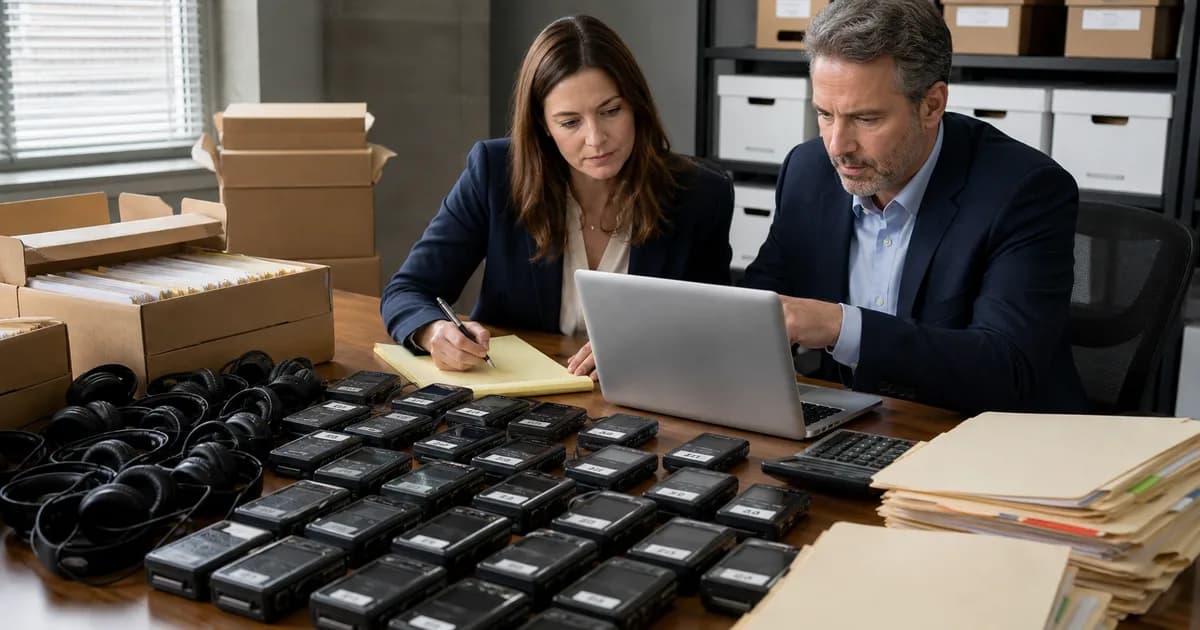
47 deposition recordings in a case folder — what does transcribing them actually cost, and how do you compare bulk packages against pay-per-use honestly?

How speaker diarization works, when it excels and fails, how to record for clean speaker separation, and how to map Speaker A/B labels to real names fast.
Newsletter
Join the community
Subscribe to our newsletter for the latest news and updates